Lucky Nudge (Atomic Slot Lab) — Behavioural Nudging Mechanics in Modern Online Slots
The slot Lucky Nudge developed by Atomic Slot Lab is frequently mentioned in discussions about behavioural design in gambling products. Rather than relying only on standard slot features such as free spins or multipliers, this title focuses on a concept known as “nudging”. In behavioural economics, nudging describes subtle design decisions that influence user choices without forcing them. In online slots, these mechanics appear through visual signals, interface feedback, reward timing, and carefully designed volatility patterns. Lucky Nudge provides a useful case study for analysing how modern slot developers incorporate behavioural triggers into gameplay while still maintaining the mathematical structure required by regulated gambling markets.
The Concept of Nudging in Slot Game Design
Nudging originates from behavioural economics research, particularly work by Richard Thaler and Cass Sunstein, who described how small environmental cues can influence decisions. In digital entertainment products, the same principle is applied through interface design and feedback loops. Online casino games use these techniques to guide players toward continued engagement without explicitly instructing them to do so.
In slot machines, nudging mechanics can appear in several forms. These include near-miss outcomes, progressive visual indicators, anticipation effects before bonus rounds, and animated reel behaviour that suggests a win might be close. None of these features change the mathematical probability of the game, but they strongly affect how the experience feels to the player.
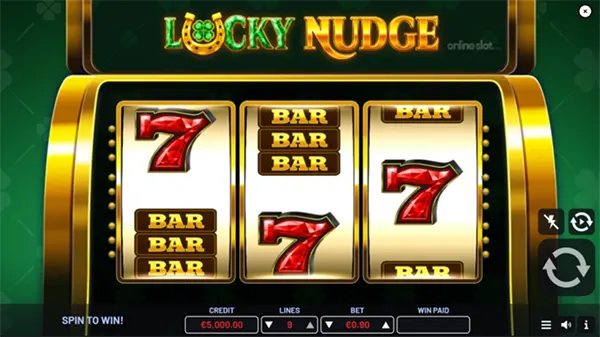
Lucky Nudge illustrates how these mechanics are embedded directly into the game flow. Atomic Slot Lab designed the interface so that reels frequently produce visually suggestive outcomes such as two matching symbols with the third narrowly missing the payline. This design approach does not increase RTP but creates a sense of proximity to rewards, encouraging longer play sessions.
How Near-Miss Mechanics Influence Player Perception
One of the most widely studied nudging techniques in slot games is the near-miss effect. This occurs when a player almost hits a winning combination, such as landing two jackpot symbols while the third appears just above or below the payline. From a statistical perspective, this result is simply another losing spin. However, the psychological response can be very different.
Research conducted by gambling behaviour specialists has shown that near-miss events can activate the same brain reward circuits as actual wins. This creates the impression that a player is “close” to success, even though the outcome of each spin is determined independently by a random number generator. Developers use carefully balanced reel distributions to make these moments appear regularly without altering the mathematical fairness of the slot.
Lucky Nudge incorporates this technique through reel layouts that frequently display partial symbol combinations. Combined with short animations and sound cues, the game creates brief anticipation moments before the final reel stops. These micro-events form a behavioural signal that subtly encourages the next spin.
Structural Game Mechanics Behind Lucky Nudge
While behavioural design plays a visible role, the core structure of Lucky Nudge still follows the mathematical framework used in regulated slot machines. The game operates using a certified random number generator that determines symbol outcomes before each spin animation begins. This ensures that every result remains statistically independent.
The slot’s volatility profile is another important factor. Lucky Nudge is typically classified as medium-to-high volatility, meaning that smaller wins appear less frequently but larger payouts are possible during bonus sequences. This structure works well with nudging mechanics because periods without wins are punctuated by occasional reward bursts that reinforce engagement.
Atomic Slot Lab also uses layered feedback systems. Visual highlights on reels, celebratory sound design, and animated paylines appear even for modest wins. These signals create a perception of frequent progress, which is a recognised engagement strategy in both gambling and video game design.
Reward Timing and Engagement Loops
Another behavioural element in Lucky Nudge is reward timing. Instead of delivering rewards at completely unpredictable intervals, the game’s volatility curve often produces clusters of smaller payouts followed by longer dry phases. When a reward cluster appears, it reinforces the idea that continued play may lead to additional outcomes.
This approach forms what designers refer to as an engagement loop. A player spins the reels, receives visual feedback, occasionally wins a small payout, and then immediately returns to the next spin. Over time, these loops become familiar patterns that keep the gameplay rhythm consistent and easy to follow.
Lucky Nudge amplifies this loop by using dynamic reel animations and symbol movements. For example, when a partial combination appears, the reels may slow down slightly or emphasise the final symbol landing. Although the outcome was already determined by the random number generator, the animation stage builds tension and extends the moment before the result becomes clear.
Ethical Considerations and Regulation of Nudging Mechanics
The use of behavioural nudging in gambling design raises important questions about player protection. Regulators in several jurisdictions have examined how features such as near-miss events, celebratory animations, and loss-disguised-as-wins may affect player behaviour. As a result, modern slot development often takes place within strict regulatory frameworks.
Authorities such as the UK Gambling Commission and Malta Gaming Authority require developers to maintain transparent RTP calculations and certified random number generators. Even when behavioural mechanics are used, they cannot alter the underlying probabilities of outcomes. This separation between presentation and mathematics is a key element of regulated slot design.
Lucky Nudge demonstrates how developers balance behavioural engagement with compliance requirements. The nudging elements operate primarily through visual and psychological cues rather than probability manipulation. Players still interact with a mathematically fair game, though the presentation is designed to maintain attention and encourage continued play.
Responsible Gambling Perspectives on Behavioural Design
Responsible gambling organisations often analyse how game design affects decision-making. Nudging mechanics are not inherently harmful, but they can influence how long players remain engaged with a game. Because of this, regulators increasingly require operators to provide tools such as session timers, deposit limits, and reality checks.
Players themselves benefit from understanding how these mechanics work. Recognising that near-miss outcomes or animated reel behaviour are part of the entertainment design rather than indicators of an approaching win can help maintain realistic expectations. Each spin remains independent regardless of previous outcomes.
Lucky Nudge therefore serves as an informative example of how behavioural economics intersects with slot development. By examining its design, players and analysts can better understand how modern casino games combine mathematics, psychology, and visual feedback systems to create engaging but regulated gambling experiences.